
Explore the dynamic world of leadership and development with the esteemed Ryan Gottfredson, a distinguished leadership development professor and consultant who is at the forefront of reshaping organizational leadership.
Ryan, with his expertise in elevating leaders through a focus on Vertical Development, shares invaluable insights into the current trends in Learning and Development (L&D). In a landscape where some organizations are slowing down and others are speeding up their investment in leadership development, Ryan predicts a significant competitive advantage for those accelerating their efforts.
Listen as we delve into the factors contributing to this advantage and uncover impactful trends within the L&D space. Ryan provides a glimpse into his upcoming book, Becoming Better, where he explores the interplay between the DOING and BEING sides of ourselves. Gain practical insights on how individuals can focus on and elevate their BEING side for transformative improvement, inspired by Ryan’s own experiences.
Reflecting on our recent webinar, Developing the Characters of Leaders, Ryan highlights key takeaways, emphasizing the crucial role of the BEING side for leadership effectiveness. Explore the critical steps for Vertical Development, including foundational workshops, self-awareness, and Vertical Development exercises.
In an exclusive Q&A session, we dig deeper into the challenges of leadership in organizations. Discover statistics revealing leaders falling short of expectations and learn how Ryan addresses and remedies these challenges. Gain insights into the best ways to approach the overarching challenge of elevating organizations by focusing on the Vertical Development of their leaders.
Listen to transformational success stories from organizations like Experian, UNI, and TekSynap, showcasing the positive impact of Ryan’s work with organizational leaders. For HR leaders looking to better develop their teams, Ryan provides insights into evaluating investment in leadership development, focusing on Vertical Development, and infusing the language of Vertical Development and mindsets.
Join us for an enlightening episode filled with practical wisdom and actionable strategies. This is HRDQ-U In Review – your go-to podcast for all things L&D, featuring the insightful Ryan Gottfredson.
00:01
Welcome to this week’s episode of the HRDQ-U In Review podcast, where we bring you the latest insights and practical tools for enhancing soft skills training within your organization. This podcast is brought to you by HRDQU.com and I’m your host, Sarah, Learning Events Manager at HRDQ-U. And today I have Ryan Gottfredson joining me to discuss the webinar, Developing the Character of Leaders.
00:23
Ryan has presented webinars with us since 2020, and he’s always sharing really exciting and engaging content to our HRDQ-U community. So thanks so much for joining me today, Ryan. Yeah, thanks for having me. And now, I guess, putting up with me for three to four years.
00:40
I know. It’s been some time. I went and I just checked back today from when we did our first podcast back in May of 2020. So it’s been time. So, and this is your first time, I believe, joining us here on the podcast, correct? It is on the podcast. Yep. Been looking forward to it. Yes. So, well, thanks for joining me. And for those of, um, that didn’t get to listen, tune into the this week’s webinar. Can you share a little bit about who you are, what you do? Just give your background so we can catch everybody up to speed.
01:07
Yeah, for sure. So I am a leadership professor at Cal State Fullerton. I would say that’s one of my full time jobs. And then I’m also a leadership development consultant. I would call that my other full-time job. And I love the synergy that comes with both of those worlds, because it allows me to be a researcher, an author, a consultant, a coach, and a few other things to throw in the mix. And it’s been just an amazing journey over the last several years.
01:35
to be able to work with organizations to help them to elevate their leader. So that’s what I focus on, is helping organizations upgrade and elevate their leader so that they operate at a higher, more effective level. That’s awesome. And I think must keep things exciting and interesting in your world as well, I would assume. Say that again.
01:54
That’s exciting. I must keep things interesting in your world. It’s always changing and and every client is different. They’ve got their own challenges, right? So there’s sometimes I work with clients where they kind of give me the black sheep of a leadership team and they say, this is this person’s last kind of thread of hope of lasting in this organization. Can you fix it? And then there’s other organizations that are just we are at a great level.
02:20
but we wanna be at an exceptional level and we need the cutting edge ideas to be able to get us there. And so every client’s a little bit different and I love that because it allows me to wade into different challenges, uh different approaches that allows people to become the best version of themselves. And this is one question I like to ask all of our guests. What changes do you see happening in the L &D space right now?
02:45
Man, so one of the things that’s been really interesting is over the last five months is I have heard the word budget more in the last five months than I have in the last five years. So there’s something going on there. And so one of the things that I’ve done over the holidays is I’ve reached out to fellow consultants that I that I network with. And I’ve asked them, what are you seeing in the marketplace? Because I’m hearing this word budget a lot. Are you hearing it a lot? And they’re saying yes. And one of the
03:13
themes that have popped up across these conversations is that there has been a pretty large divestment in the HR space as a whole. If organizations are doing layoffs, HR is usually a part of those layoffs. If organizations are doing layoffs, that usually means that they’re not necessarily willing to invest in the development of their people, because it’s kind of hard to say,
03:38
We’re developing that we’re going to spend our money on developing the people that we have yet let this group of people go. And so what I’m seeing in the marketplace is there’s some organizations that are divesting, they’re limiting their investment in leadership, uh learning and development. But there’s other organizations that are sticking with that.
04:02
What’s gonna be interesting is if we had the ability to track some of these organizations over the next several years, what I believe what we’re stepping into is an inflection point. Because, and of course I’m biased, but I believe that the organizations that continue to develop their leaders are going on a very different trajectory than the organizations that are divesting in their development.
04:28
And they’re going to end up in a completely different space, two, three, four, five plus years down the road. That’s really interesting. It’s a perspective that I haven’t heard yet from this question. So that was a really, it was nice and refreshing to hear that. And so, so what exciting things are you up to next? Oh man. Well, what I’m the most excited about is I’m working on my next book. So I’ve written a couple of books previously. Uh, first book was success mindset. Second book was called the elevated leader. And my third book now is tentatively titled.
04:58
becoming better. So one of the things that I’ve learned is both through my own personal struggles to develop as well as helping others to develop is that we actually have two different sides of ourselves. We’ve got a doing side, which represents our knowledge, talent, skills and abilities. But we’ve also got a being side, which represents our character, our psyche and our mindsets. And what I’ve learned is that almost all development work
05:28
when you think about education, athletic programming, and even organizational development, largely focuses on the doing side. Yet when we fall short of the things that we want as a person, as a leader, whatever it might be, or if we see leaders struggling in our organizations, generally the deficiency or what’s leading to those struggles is a deficiency not in our doing side, but in our being side.
05:56
And so this book that I’m writing is all about what is our being side. Let’s understand it. Let’s awaken to the current quality of our being side and then give some direction on how we can elevate along our being side to become more of the people that we want to become. Well, that’s fascinating. You’ll have to keep us keep us in the loop for when that when that gets published. And what are you know, what experiences, you know, inspired you to explore this aspect of your work with the doing and the being?
06:25
Yeah, well, so here’s one of the things that just for my I’ll give you a personal example. And I’ll give you an example of some some organizations that I’ve worked with. So in my own personal life, I’ve always been a big like I want to get better type person. And in one of the and I feel like I’ve invested a lot throughout my life on trying to improve. Right? In my mind, what I what I had in my mind is like, Oh, I got to push the pedal to the metal.
06:53
in terms of my goals and aspirations. That’s what I, if I could push harder on my goals and aspirations, then I could get to where I want to be. But what I’ve learned is that that’s not the best approach to developing ourselves. We’re generally already pushing hard enough on that gas pedal. One of the biggest problems that we have and that we are reluctant to see is oftentimes we simultaneously have our other foot on the brake.
07:22
in terms of our fears that might be going on, our self-protective fears, our limiting beliefs. And so what I’ve learned is that throughout most of my life, as I’m trying to develop myself, is I’m not as successful as I wanted to be and as I expect to be. And I’m thinking, man, I am busting my butt off, but I’m not getting anywhere because what I failed to recognize is I’ve got my foot locking up those tires on the car. So if we want to move forward,
07:52
It’s not about pushing on the gas harder. It’s actually about letting our foot off of the brick, awakening to our fears, to our self protective tendencies, to our limiting beliefs. And as we can, as we do that naturally will accelerate forward. And in my own personal life, coming to that understanding and working more on my fears, on my self protective tendencies, that has allowed me to grow and progress.
08:20
at light speed compared to where I was at before. And that’s what I see with the leaders that I work with in organizations. uh Can I give an example of a leader? Absolutely. Yeah. All right. So there’s a leader within an organization I’ve been working with. He’s on the executive team. He’s somebody I would call as a white haired leader. He’s been around a while. He’s got white hair. He’s got a lot of experience. He’s risen up into this position because he has talent, he has knowledge, he has skills.
08:50
But at the same time, he self admittedly says, I’ve been floundering. And I say, tell me more. And he says, well, I am really good at taking direction and acting upon it. I said, awesome, that’s great. So tell me how, why you’re floundering. He says, but I have a really hard time taking initiative. I have a hard time. I have to be told what to do to go do it. I have a hard time kind of creating that.
09:19
He said, let me even give you an example. He said, I just bought a car recently. And he’s again, a white haired leader. And he said, I felt like I had to call up my parents and ask for their approval. I thought, oh my goodness, like, while you are a talented person, how have you gotten to the level of an executive without being willing to take initiative? uh And so what we uncovered during the situation is, is that’s what we’ve got to work on the fears that are going on with him.
09:49
not taking initiative. And in the course of working with him and doing some coaching, come back, you know, fast forward three, four, five months later, and here’s a guy who seems like a very different person, a much more confident and capable person, somebody who’s willing to take initiative, to put his neck on the line, so take some risks that he never would have before. And now he’s seen as a much more respected leader amongst his executive team.
10:19
and his people below him are much more engaged. it’s been like, that’s the type of anecdotes that I’m fortunate to see all the time by helping people focus on their being side and not what they’re used to, which is that doing side. Wow, that’s amazing. And I’m sure really fulfilling too, for you to be able to see, you know, people overcome and achieve and become, you know, better versions of themselves.
10:49
I consider it an honor. I feel very privileged to be able to play some small role in people’s lives. And to your point, yeah, it is fulfilling and honor at the same time. And so we recently did our webinar together. This was on Wednesday. Today’s Friday when we’re recording um on developing the characters of leaders. Can you share what the key takeaways were for our registrants at this event?
11:17
Yeah, so we covered some of these initial key takeaways that we do have a doing side and a being side. And it’s our being side that represents our character. And let me define character um in, I’m gonna call it a unique way. It’s not the only way to define character. It’s not even gonna say it’s the best way to define character. But through a couple of psychological perspectives, we won’t go into the details.
11:42
One of the ways that we could define character is the degree to which our body is able to stay and operate in what I call value creation mode as opposed to self-protective mode. And one of the places where our character is commonly revealed is when we experience things like change, pressure, stress, uncertainty, and complexity. When we start to feel those things, are we able to carry that?
12:11
in the manner that we stay in value creation mode, or do we revert back to self protection mode? We’ve got a lot of examples. I think in the webinar, I brought up the example of the leaders at Enron are kind of a classic example, Kenneth Lay and Jeffrey Skilling, who when the organization starts to not do very well, they don’t stay in value creation mode, they move into self protection mode and they end up engaging in fraudulent behaviors that
12:39
are designed to protect them, but not create value for the world around them. so, oh our character is often revealed under these times of change, pressure, stress, uncertainty, and complexity. um And so, that’s one of the ways that we define character in the workshop. And what, of course, we want from us, as well as from the leaders in our organization, is we want them to be of…
13:05
high character to be people who are always operating in value creation mode, regardless of what’s going on in the world around them. And so if we want that, what we need to understand is there are two different types of development. There’s horizontal development, which is the type of development we’re used to. That’s focusing on our doing side, improving our knowledge, skills, and abilities. But there’s a second type of development that we oftentimes neglect, which is called vertical development, which is all about
13:35
focusing on our being side, upgrading our character, upgrading what I call our internal operating system. So I would say that’s kind of the first takeaway is we got a being side, doing side. Second takeaway is we need to, if we want to focus on our being side, we need to focus on vertical development. Third takeaway then was, okay, how do we go about doing that? And what I found is that the most approachable way of focusing on our being side is to focus on mindsets.
14:03
uh Mindsets are a core and foundational component of our body’s internal operating system. They dictate how we see and think about the world. And if we can awaken to the quality of our mindsets and then upgrade them, then what we’re doing is ultimately upgrading our being side, upgrading our character. And so can you talk about a little about what are you seeing related to the current state of leadership within organizations today?
14:33
Yeah, so what research has found, so there’s research coming from adult development psychology that looks at the quality of people’s being signed. And what they find is that there’s three different levels of adult development. What they find is that 64 % of all adults operate at that base level, 35 % operated that second level and only 1 % operates at that top
15:00
But when we look at executives and leaders in organizations, what we find is that only 7 % operate at that base level. So that’s good news. But 85 % operate at that second level, only 8 % operate at that top level. So what that means is in organizations, have most of the leaders and executives in organizations are operating at a mid level in terms of their being size.
15:28
And there’s a lot of common characteristics that come with leaders who operate at that mid level. One of those, let me name off some of these, is they have a tendency to be results focused as opposed to purpose focused. They have a tendency to be more focused on leading with control as opposed to leading with context. They are more finite minded as opposed to infinite.
15:56
And this level of operation generally leads to good performance, but not exceptional performance. And so I think that’s one of the things that I want organizations to awaken to is there are different levels in which people can operate. And if we can help people to awaken to the current level that they’re at, it allows us
16:26
a greater ability to elevate them to operate at a higher level. And what do you believe is the best way to approach, you know, this challenge that organizations are facing? Yeah, so I think there’s, least here’s how I approach it is I kind of see it as a three step approach. The first step is we’ve got to inform, right? Usually that’s through workshops, webinars, we got to lay out some foundational understanding of some of these ideas that we’ve talked about.
16:54
like we’ve got a doing side, we’ve got a being side. We’ve got to understand what vertical development is. And we need to understand what mindsets are and what role that they play in our lives. So there’s some foundational work is usually the first thing that I do. The second thing that I do is then I work with leaders to deepen their self-awareness. I think one of the ways that I find it’s effective to talk about is to say, I don’t think that any of us are fully baked.
17:23
There’s a lot of leaders out there that kind of operate as if they kind of believe that they are. But the reality is, and I think everybody would say this, we’re not all fully baked. And if we could come to just admit that and help to see the areas of ourselves where we could stand and get in the oven a little bit longer, then that opens the door for us to elevate.
17:47
And then, so second step is self-awareness. And then the third step is engaging in specific exercises or activities designed to focus specifically on one’s vertical altitude. Because here’s what I’ve learned as I work with leaders in organizations, is that the leaders of an organization, of a team or a group, they set the ceiling for how effective that organization, team, or group can be.
18:15
And if we want to elevate that organization, or group, we’ve got to elevate the leaders. We can’t expect that group to get any better than where the leaders are at. So that’s why I love working with leaders is because they are the pivot point, the linchpin for elevating the entire organization. I know that if we can elevate the leaders, we could lift the entire organization. And I think ah that’s the powerful thing about
18:45
leadership as a whole and particularly working in leadership development. And can you share some of the success that you’ve had working with organizational leaders? Yeah. So one of the organizations that I’ve worked with, they are in the healthcare space. And when I first started working with their executive team, I asked the COO, I asked her, how do you measure success in your business? And she said, double digit growth year over year.
19:12
And, you know, outwardly, I’m kind of keeping a smile on my face and inwardly, I’m thinking, no, like, you’re a healthcare organization. And what you were telling me is what you care the most about is about the numbers and about growth. And what that means ultimately, is you are likely as a leader creating a culture where the employees in that organization see the patients that they serve, not as people, but as numbers.
19:43
growth numbers in particular, right? So this is what I stepped into when I first started working with this executive team. Now they had been successful. They had been growing 10 % year over year, but they’re starting to feel the pinch. I think this last year they did eight or 9 % and so they were starting to freak out a little bit. Still growing, right? Still in not a bad position. But where we’ve gotten them and where we’ve gotten them to do
20:13
is to, in my opinion, operate at a higher level. Now, if you were to ask the executive team, how do you measure success? They won’t tell you double digit growth year over year. They will tell you about their purpose of the organization. They will start to tell you stories about their patients that are living with greater wellbeing than ever before, right?
20:38
And they recognize there’s nothing that there’s nothing wrong with numbers and tracking revenue growth year over year, but they recognize that what’s ultimately important is their purpose and fulfilling their purpose. And the revenue and the growth metrics are only a sign or a signal of whether or not they’re on track for fulfilling their purpose. So now their mentality is completely different. They are not focused on the numbers. They are focused on the purpose. And by doing so, they are creating
21:07
a much more engaging and dynamic culture that will allow them to be successful in the
21:16
And last content question here for you today. What do HR leaders need to do or need to know to do better to develop their leaders? Yeah, a really good question. And here’s, coming off of what I mentioned earlier is I just am hearing that, again, if there’s layoffs going on, oftentimes HR is generally a part of that. Our best job protection, whether we’re an HR or elsewhere,
21:44
is to create value for the people that we serve. So what we need to do is in the HR space is we need to be somebody who is creating value, who is bringing in cutting edge and innovative ideas that adds value to the people, the teams that we work with. And in my opinion, one of the ways that HR people can bring greater value is to infuse these ideas that we’ve been talking about.
22:13
surrounding the concepts of being versus doing and vertical development versus horizontal development. So vertical development in my mind is the wave of the future. It’s gonna be organizations who focus on that are gonna set themselves apart from all other organizations. I mean, we already see that naturally. Like for example, I think Microsoft is a fantastic case study. There’s several others we can talk about.
22:43
Microsoft went from, I’m going to call a mid-level leader in Steve Ballmer to a high-level leader in Sachin Nadella. And we could see and track the impact that that has. That’s just another way of saying, if we can help our leaders to elevate, they will elevate our organization. So HR leaders need to learn about and bring in the concepts around vertical development. And if they can do that, they will be creating the value, which ultimately
23:12
will lead to greater job protection. And are there any specific challenges that HR leaders might encounter during this process? Well, yeah, there’s always going to be challenges. There’s going to be pushback, right? What I’ve seen with organizations, in fact, I was working with an HR lady a couple of weeks ago, and she said to me, which executive team do you know is going to admit that they need development? I thought that was a rather interesting answer.
23:42
Unfortunately, not many, right? So that’s one of the biggest challenges. So HR people need to become partners with the executive teams or any leadership teams that they work with. They need to develop the trust and they need to be seen as a go-to expert on these types of things because it’s only when that’s the case that they are given the opportunity to either themselves
24:11
or bring in others to work with the leaders on their development. Leaders are super busy, I get it, but at the same time, we need to continually help them to sharpen, to grow and develop. And if that isn’t happening, over time, they’re becoming dull. That’s ultimately what’s gonna happen, at least relative to other people or other organizations in the marketplace.
24:38
And Ryan, before we wrap up today, can you let listeners know where they can learn more about your work and connect with you? Yeah, for sure. So best place is probably my website, ryangotfordson.com. Whole bunch of resources. In fact, there’s a couple of free assessments, a mindset assessment, a vertical development assessment, and a variety of other supporting resources. So that’s the best place. Second best place is LinkedIn and would love to connect with anybody there. Great. Well, thank you so much for your time today, Ryan, and for sharing more information on this really important topic.
25:08
Yeah, for sure. Thanks for creating the creating the space for us and helping us to elevate the field of HR. Yes. And if you have not had the chance to watch the webinar, make sure you click the link in the description below so that you can check that out. We hope you enjoy listening to the HRDQ-U In Review podcast available on all major streaming platforms. If you did enjoy today’s episode, make sure to give us a follow and leave us a five-star review.
25:33
Thank you all for tuning in to this week’s episode of the HRDQ-U In Review podcast brought to you by HRDQU.com.

Listen to this podcast event at no charge with your
HRDQ-U Free Access Membership
Explore the dynamic world of leadership and development with the esteemed Ryan Gottfredson, a distinguished leadership development professor and consultant who is at the forefront of reshaping organizational leadership.
Ryan, with his expertise in elevating leaders through a focus on Vertical Development, shares invaluable insights into the current trends in Learning and Development (L&D). In a landscape where some organizations are slowing down and others are speeding up their investment in leadership development, Ryan predicts a significant competitive advantage for those accelerating their efforts.
Listen as we delve into the factors contributing to this advantage and uncover impactful trends within the L&D space. Ryan provides a glimpse into his upcoming book, Becoming Better, where he explores the interplay between the DOING and BEING sides of ourselves. Gain practical insights on how individuals can focus on and elevate their BEING side for transformative improvement, inspired by Ryan’s own experiences.
Reflecting on our recent webinar, Developing the Characters of Leaders, Ryan highlights key takeaways, emphasizing the crucial role of the BEING side for leadership effectiveness. Explore the critical steps for Vertical Development, including foundational workshops, self-awareness, and Vertical Development exercises.
In an exclusive Q&A session, we dig deeper into the challenges of leadership in organizations. Discover statistics revealing leaders falling short of expectations and learn how Ryan addresses and remedies these challenges. Gain insights into the best ways to approach the overarching challenge of elevating organizations by focusing on the Vertical Development of their leaders.
Listen to transformational success stories from organizations like Experian, UNI, and TekSynap, showcasing the positive impact of Ryan’s work with organizational leaders. For HR leaders looking to better develop their teams, Ryan provides insights into evaluating investment in leadership development, focusing on Vertical Development, and infusing the language of Vertical Development and mindsets.
Join us for an enlightening episode filled with practical wisdom and actionable strategies. This is HRDQ-U In Review – your go-to podcast for all things L&D, featuring the insightful Ryan Gottfredson.
[ PODCAST PLAYBACK ]
You must be signed-in with your membership account to access this content.
Enjoyed this podcast? Have suggestions on how we can improve? Please take our quick survey and receive a coupon for 15% OFF any of our individual membership plans.
*Instant 15% coupon available upon completion of survey.
Want to learn more? Become an Individual or Corporate member to watch this and hundreds more webinars!
Character development in leaders requires a form of development that differs from traditional leadership development efforts. In this session, Ryan Gottfredson, PhD, will help leadership developers understand what leadership character is, why it is so important for leaders, and how to develop it in leaders.
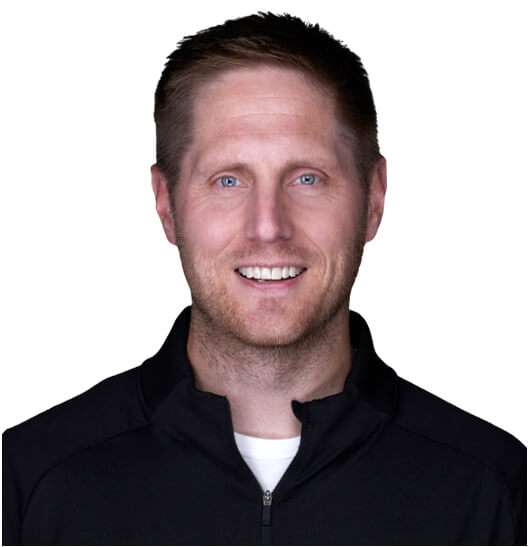
Ryan Gottfredson, PhD
Ryan Gottfredson, Ph.D., is a cutting-edge leadership development author, researcher, and consultant. He helps organizations vertically develop their leaders primarily through a focus on mindsets. Ryan is the Wall Street Journal and USA Today best-selling author of Success Mindsets: The Key to Unlocking Greater Success in Your Life, Work, & Leadership and The Elevated Leader: Leveling Up Your Leadership Through Vertical Development.
He is the founder and owner of his consulting company, Ryan Gottfredson LLC, where he specializes in elevating leaders and executive teams in a manner that elevates the organization and its culture. He has worked with top leadership teams at CVS Health (top 130 leaders), Deutsche Telekom (500+ of their top 2,000 leaders), Experian, and others. He has also partnered with dozens of organizations (e.g., Federal Reserve Bank, Nationwide Insurance, Cook Medical) to develop thousands of mid-level managers and high-level leaders.
He is also a leadership professor at the College of Business and Economics at California State University-Fullerton. He holds a Ph.D. in Organizational Behavior and Human Resources from Indiana University and a BA from Brigham Young University. As a respected authority and researcher on topics related to leadership, management, and organizational behavior, Ryan has published over 20 articles across a variety of journals, including Leadership Quarterly, Journal of Management, Journal of Organizational Behavior, Business Horizons, Journal of Leadership and Organizational Studies, and Journal of Leadership Studies. His research has been cited over 4,000 times since 2018.

Leadership training is a $366 billion global industry. Despite that, 75% of organizations say their leadership development programs are not very effective. A primary reason for the lack of development effectiveness is because they almost solely focus on Horizontal Development (think “tooling up” one’s talent) instead of Vertical Development (think “leveling up” one’s character). Ryan Gottfredson helps organizations vertically develop their leaders so that they can lead and operate from a higher, more effective level.

Training Tools for Developing Great People Skills
This event is sponsored by HRDQ. For 45 years HRDQ has provided research-based, off-the-shelf soft-skills training resources for classroom, virtual, and online training. From assessments and workshops to experiential hands-on games, HRDQ helps organizations improve performance, increase job satisfaction, and more.
Effective Team Leadership Customizable Courseware
Discover how to effectively use delegation to enhance team members’ performance as well as learn how to cultivate effective communication skills as team leaders.
Buy at HRDQstore.com
Transformational Leader Customizable Courseware
Uncover the four components of transformational leadership – calling, charisma, challenge, and caring – and develop the skills and techniques necessary to create a positive impact in thee workplace.
Buy at HRDQstore.com
The HRDQ-U In Review Podcast, brought to you by HRDQU.com, brings you the latest insights and practical tools for enhancing soft-skills training in your organization. As a learning community for trainers, coaches, consultants, managers, and anyone passionate about performance improvement, we interview subject matter experts and thought leaders from recent webinars they presented with us to take a deeper dive into the content they shared and answer all your questions. Join us as we explore new ideas and industry trends, share success stories, and discuss challenges faced by professionals.
The HRDQ-U In Review Podcast is intended for HR and training professionals, organizational development practitioners, and anyone interested in improving workplace performance and productivity.
New episodes of HRDQ-U In Review are released every week.
The length of the episodes varies, but they typically range from 15-30 minutes.
The podcast covers a wide range of topics related to HR and organizational development, including leadership development, team building, communication skills, conflict resolution, employee engagement, and more.
No, HRDQ-U In Review is completely free to listen to.
You can listen to any available HRDQ-U In Review Podcast right on our website at HRDQU.com via our embedded Spotify player on the related webinar page. In addition to our self-hosted option, you can find the HRDQ-U In Review Podcast on many of the popular streaming services, which are listed above.