What You Need to Know About Myers-Briggs Type Indicator
Sign up for our Newsletter
Don’t miss out on upcoming blog posts, free webinars, sales, and more!
SHARE
SHARE
SHARE
EMAIL
PRINT
Learn the basics of the Myers-Briggs Type Indicator and how its popularity affects aspects of life, even as it faces challenges in accuracy and reliability.
Personality tests have become very common over the last few years, and they’ve managed to work their way into almost every area of modern life. You’ll see them on social media feeds, embedded in corporate training programs, and spread across dating apps and LinkedIn profiles. You’ve come across those four-letter codes at least a few times by now, and a fair number of people have started to treat these labels like they represent the ultimate truth about human personality. Every year, businesses invest billions of dollars in personality assessments for existing employees and job candidates. On the other side of this trend, job seekers frequently worry that their assigned “type” might count against them before an interview even begins.
The Myers-Briggs Type Indicator has turned into a universal language that people use to describe themselves and how others work. Even though it’s popular, the system has some large reliability problems. Between 39% and 76% of test-takers get a different result when they retake the same test just 5 weeks later. Academic psychologists mostly don’t trust it because the personality characteristics fall on a range instead of fitting into clean either/or categories. Even with these problems, 89% of Fortune 100 businesses have used Myers-Briggs at some point, and entire online communities have formed around these 16 personality types.
Popularity and accuracy are two different concepts, and with personality tests, that distinction actually matters quite a bit. Careers get chosen based on the MBTI types. Managers build entire teams around these letter combinations. Dating profiles get filtered by four letters – letters that might change if the same person retook the test a month from now! People make big life decisions based on the MBTI results, so it’s worth looking at what the science backs up; it doesn’t all hold water, and even die-hard supporters of the framework will acknowledge that some of the parts rest on pretty wobbly foundations.
Recommended event from HRDQ-U
Want to learn more? Watch a webinar or join a workshop on this topic.
Discovering and Standing in Your Authentic Voice
We’ll explore the difference between the voice used to “fit in and be accepted” and an authentic voice that fully utilizes skill, ability, and work style orientation. We’ll share the insights and experiences that shape our professional stance and build high-functioning, empathic, and graceful teams. And we’ll learn the guiding principles and process of authentic voice that culminate in a way to continually develop self-expression and mentor others in the process.
Myers-Briggs divides personality into four main pairs of preferences, and each pair measures a different part of how you take care of the world around you and how you process information every day. The first personality pair is Extraversion versus Introversion, and it describes how you recharge your mental batteries. Extraverts get their energy back when they’re around others and stay active out in the world. Introverts work differently – they need quiet time alone (or maybe with just one or two close friends) to feel recharged and ready to go.
The Sensing versus Intuition pair is about how you take information and process the world around you. Sensors trust what they can see, hear, touch, taste, and smell right in front of them. Facts and concrete specifics matter most to them – especially the ones they can confirm with their own eyes. Intuitives work a bit differently. What something could mean later, or how it might connect to bigger ideas – that’s what grabs their attention.
The third pair is called Thinking versus Feeling, and it tells you how you actually decide after you’ve taken in your information. Thinkers pull back from the situation and look at everything from a purely logical angle. They’re looking for the most sensible answer they can find, and they base that choice on facts and neutral measures. Feelers work differently -–they think about how their decisions are going to affect others around them and their relationships. Harmony matters quite a bit to them, and they want to make decisions that feel right and match up with what they value on a personal level.
The last pair is Judging versus Perceiving, and it describes how you like to take care of the outside world and your day-to-day life. Judgers like structure and a plan that’s already been decided just feels right to them. They check items off a list and get a sense of control and completion that they need. Perceivers work differently – they stay flexible and leave some room for new information whenever it shows up. They keep their options open for as long as they reasonably can – it’s where they feel most comfortable.
Katherine Briggs and her daughter Isabel Myers created this framework back in the 1940s based on the work of psychologist Carl Jung. Jung had all these tough theories about how personality works, and this mother-daughter team took those concepts and turned them into something that was quite a bit more accessible to use in their lives.
I like to compare these preferences to hand preference – if you’re right-handed or left-handed. You can use either hand and do it whenever you have to. But one hand is always going to feel more natural and comfortable than the other one does. Your four-letter type code tells you which preference feels more natural in each one of these four pairs.
What Affects Your Test Results
The official Myers-Briggs questionnaire contains 93 questions in total, and they all make you pick between just two possible answers. There’s no neutral middle option if either answer seems to describe you equally well. Every question sorts you into one category or the other across all four personality dimensions, and it doesn’t matter if that feels accurate to you or not.
Free versions of the test are all over the internet, and it can be tempting to just grab one and call it done. Some of these free versions actually do use the same questions and scoring methods as the official assessment, which is great. Plenty of them don’t, and they take different shortcuts with the format. The authentic questionnaire makes you choose between paired statements, and each statement in the pair can seem true to you depending on the day or the situation you’re in at the time – this particular format can be pretty frustrating when you’re trying to answer with honesty and self-awareness.
The way the questions are worded can push your answers to lean in one direction or the other. You’ll read a question and feel very torn between the options because they each describe you just in different situations – this happens to almost everyone because the way we actually act doesn’t always fit into the basic either-or options that the test forces you to choose from.
Your mood on test day can affect your results. Stress and exhaustion will change the way that you answer questions, and you might give different answers compared to how you’d answer on a relaxed Saturday morning when you’re well-rested and feeling calm. Whatever else is going on in your life at that time also matters quite a bit because it’s going to shape how you respond to the questions about your habits and what you like.
The place where you take the test can change your results even more. Taking it at your desk at work versus on your couch at home will probably give you pretty different answers. At work, you’re going to answer the questions based on how you behave in professional mode instead of how you are as a person outside of the office. Your work persona will start to take over your answers and steer them in a direction that doesn’t match who you are when you’re off the clock.
Plenty of test-takers get different results when they retake the test multiple times. Your assigned type can change from one attempt to the next – and it’s usually not because you’ve fundamentally changed as a person. Your circumstances have changed in between each test – it’s what’s changing your answers. Maybe you’re under pressure at work, or you just started a new relationship, or there’s some family drama going on. The scoring system in these tests doesn’t account for any of these variations in your life, and it doesn’t give you a way to express that you fall somewhere in the middle of two extremes instead of being on one side or the other.
Major Problems with the Test
The test has big reliability problems, and it’s not like breaking news or anything – experts have been talking about these problems for years. New studies are showing that nearly 50% of all test-takers get a different result when they retake the assessment just 5 weeks later. For a test that’s supposed to measure your basic personality (which should stay the same over time), that’s a large problem.
Another big problem is how it labels you in black-and-white terms. Your personality doesn’t actually work like switches that you can just flip on or off – it falls along a range, and the majority of us are going to land somewhere in the middle on most of these scales. The MBTI will force you to choose one category or the other if you might only lean 51% in one direction compared to 49% in the other.
Most psychologists see the test as more of entertainment than science. It’s not worthless, though, and you can learn something about yourself from it – plenty of test-takers find value in the self-reflection that comes with answering the questions. Just remember to put it all in perspective. You probably don’t want to overhaul your career or make big life changes based on four letters from a personality quiz. The test might give you some interesting ideas. Your results could help you, or maybe they’d even be eye-opening. But they’re not going to be the final authority on who you are or what you should do professionally.
Why These Tests Feel So Accurate
The Myers-Briggs seems strikingly accurate the first time you read through your results. Users will finish the assessment, and right there, feel like the description captures who they are as a person. Psychologists have actually studied why these personality profiles resonate so strongly with us, and the explanation behind that is interesting.
Psychologists have a name for this phenomenon – it’s called the Forer Effect. It’s when someone reads a vague personality description and gets convinced that it applies to them in a personal way. Horoscopes work the same way, and they use this same psychological trick to feel so accurate. Our brains are wired to search for patterns and meaning – even when we come across general statements about personality and behavior.
Confirmation bias makes all this even stronger. When readers go through their personality type, they’ll latch onto the parts that feel like a match and ignore or gloss over anything that doesn’t fit who they are. Our brains want to find the proof for what we already believe about ourselves. And plenty of these personality descriptions are full of characteristics many people share.
Myers-Briggs has actual staying power, and it goes well past the psychology behind it. You get your type, and it gives you an immediate sense of belonging to something. Online forums are filled with members who share the same four-letter type and swap stories and compare their experiences with one another, and each personality type gets its own memes (some funnier or more relatable than others). A few dating apps even have built-in filters that let you search for possible matches based on their Myers-Briggs type.
The community is a strong force, and finding where you belong matters and feels validating. You pick a label that fits who you are and then discover others who use that same label, and it builds a sense of connection. The framework gives everyone a common language to talk about personalities and how they relate to one another, and it’s easy enough that most users can pick it up and actually use it.
Finding value in personality types doesn’t mean that you’re gullible or missing some analytical ability. Our brains are literally wired to look for patterns and sort information into categories – that’s just how we make sense of everything around us. Most of us want to know ourselves a little better, and we’re also pulled toward others who seem to get us. This need for connection and self-knowledge shows up just about everywhere, from the workplace to our personal relationships to the online communities we’re part of.
Better Assessment Tools That Actually Work
The Big Five personality model and Myers-Briggs don’t work the same way at all. Myers-Briggs is going to sort everyone into one of sixteen different personality types, and it makes it pretty categorical by design. The Big Five takes a different strategy – instead of putting you into boxes, it measures where you land on a scale for five separate core characteristics. These characteristics are openness, conscientiousness, extraversion, agreeableness, and neuroticism.
One big benefit of this model is the amount of strong research that supports it. The Big Five has been around for decades at this point, and scientists have tested it across cultures and age groups all over the world. These studies have shown the same patterns over and over; it’s why it’s become the standard framework for personality psychology experts.
Research studies have found time and again that conscientiousness lines up well with job performance across different industries and roles. Agreeableness and emotional stability usually connect with higher satisfaction levels between partners in personal relationships. That said, none of these patterns is foolproof or absolute. The test gives you helpful information, but it’s not going to predict everything well.
CliftonStrengths is a choice if workplace development is your main priority. The assessment works differently than most of the personality tests you’ll come across. Instead of measuring personality characteristics, it focuses on your natural strengths and talents. The creators built it from the ground up with career development in mind.
One of the biggest ways these alternatives separate themselves from Myers-Briggs is in how they measure personality. Most of us land somewhere in the middle on any given personality trait. Take introversion and extraversion – nobody is purely one or the other. We all fall somewhere along that scale between the two.
To choose if a personality test is worth your time, consider a few things. It should produce similar results if you take it more than once. Someone should have validated it against actual outcomes. And maybe what matters most to you – whether it gives you information that’s actually helpful in your day-to-day life.
Keep These Tools in Perspective
These frameworks work best if you treat them as just one of the tools out of a few to know yourself and others around you. Personality tests help you make sense of the different working styles and communication preferences across your entire team. They’re not meant to set hard and fast limits on what anyone can accomplish or who makes a strong teammate. Don’t let a personality test become the factor that boxes in your career or damages a great working relationship with a colleague. Everyone has the room to grow and adapt over time, no matter which category they land in. You should stay open to the different systems and perspectives, but they don’t put too much weight on any single one like it holds the answers to human behavior.
At HRDQ-U, we have plenty of resources available if you want to dig deeper into work styles and team interactions. Our learning community is full of webinars, podcasts, and blog articles so you can stay current with the latest topics in HR and leadership development. The on-demand library is accessible at any time that works for your schedule.
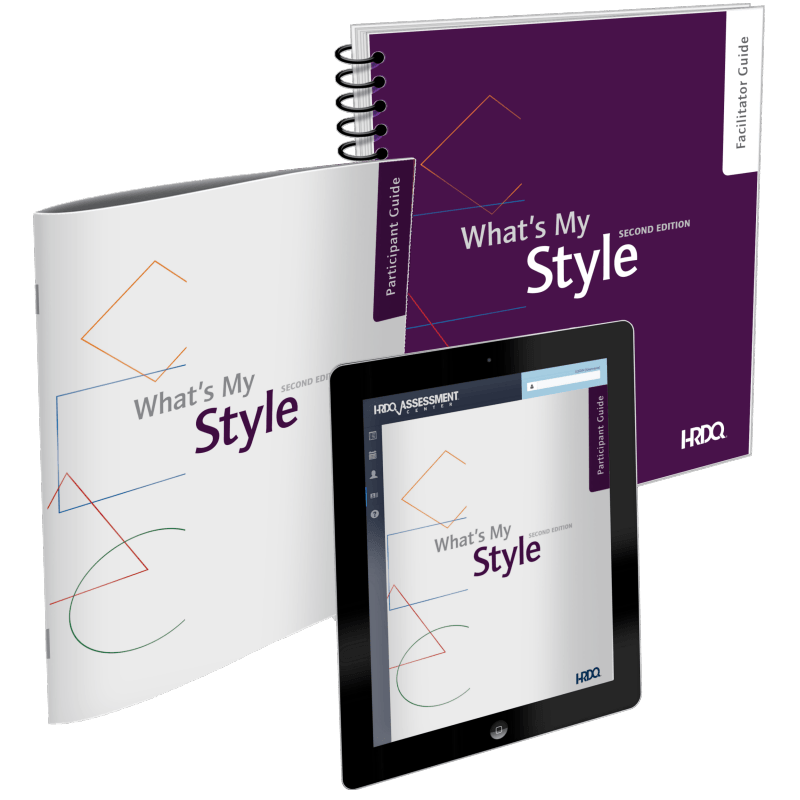
At HRDQstore, we also have a personality-based tool called What’s My Style. It’s a research-based assessment grounded in the work of influential pioneers such as William Moulton Marston, Carl Jung, and others. What’s My Style helps teams understand each person’s work style and then shows everyone how to work together better across the different personalities in the organization. What’s My Style differs from other personality assessments that can easily change over time. Instead, it focuses on how you prefer to behave, which is more closely aligned with your true personality style.
Take a look at What’s My Style today, and in just 10 minutes, uncover your personal style and get the tools to read others’ styles to effectively work with anyone.
Brad Glaser is President and CEO of HRDQ, a publisher of soft-skills learning solutions, and HRDQ-U, an online community for learning professionals hosting webinars, workshops, and podcasts. His 35+ years of experience in adult learning and development have fostered his passion for improving the performance of organizations, teams, and individuals.
Recommended Training from HRDQ-U
Discovering and Standing in Your Authentic Voice
We’ll explore the difference between the voice used to “fit in and be accepted” and an authentic voice that fully utilizes skill, ability, and work style orientation. We’ll share the insights and experiences that shape our professional stance and build high-functioning, empathic, and graceful teams. And we’ll learn the guiding principles and process of authentic voice that culminate in a way to continually develop self-expression and mentor others in the process.
Check out our top-selling training materials on this topic.
What’s My Style
Personality differences don’t have to derail teamwork, communication, or productivity. With What’s My Style, you’ll uncover your own personality style and learn how to recognize and work with the styles of others. This eye-opening tool equips you with practical techniques to bridge differences, improve collaboration, and boost performance at every level.