Build Basic AI Literacy on the Team
One of the first steps in this transformation is building basic AI literacy across your organization. Understanding the fundamentals of AI – what it is, how it works, its potential applications, and its shortcomings – can demystify the technology and reduce apprehension among your team and leadership. This foundational knowledge is crucial for the whole team – from the tech-savvy to the AI newcomer. However, it’s important not to assume that using AI compliantly, appropriately, effectively, and securely will come naturally. This is where solid AI governance frameworks come in. These establish clear guidelines for using AI to help your team know what AI tools are available to them, when to use AI, how to use it, and when it might not be right for the job.
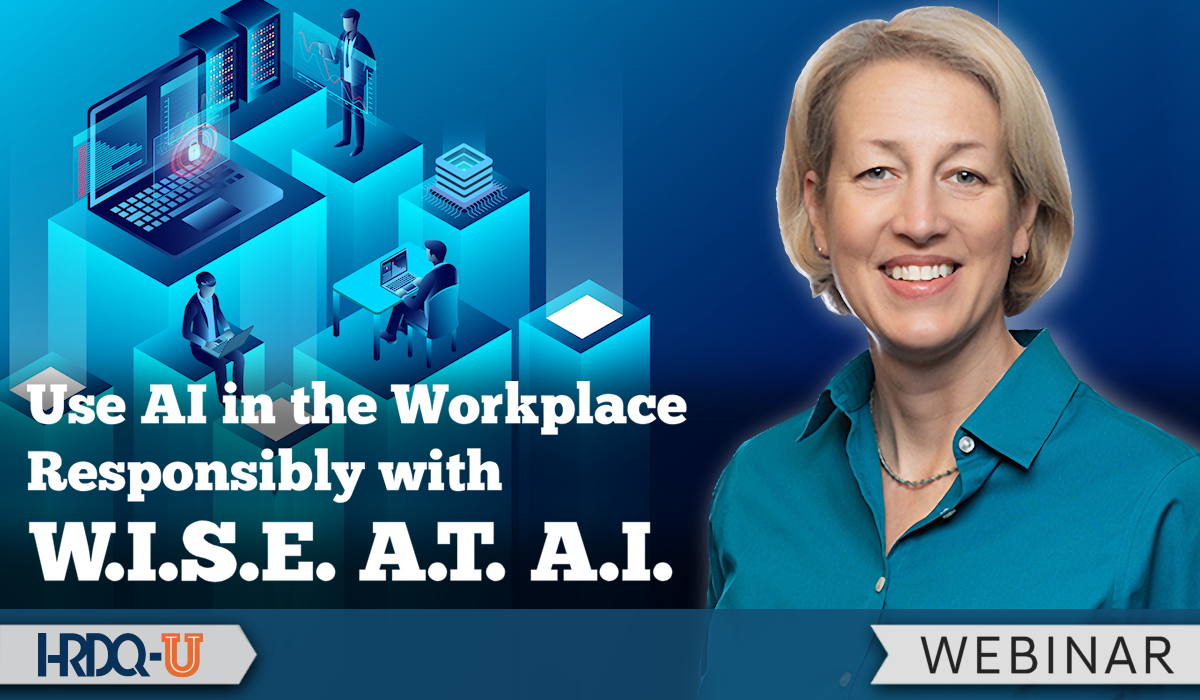
For example, at TorranceLearning, we had our whole team complete our AI Driver’s Permit course. Everyone took about 3 hours over the span of a couple weeks to use this opportunity to get acquainted with our W.I.S.E. A.T. A.I. framework and practice putting our guidance to the test with the AI tools we use most. We’ve made completing this course a requirement before anyone is cleared to use AI in their work to make sure everyone has a shared basic level of AI literacy.
Partner with Business, IT, and Legal
AI transformation isn’t solely an L&D initiative; it benefits from a collaborative effort across departments. Partnering with business leaders, IT, and legal teams can provide a more holistic and consistent approach to AI adoption. Drawing on expertise from these areas helps in creating effective AI governance frameworks that align with the organization’s strategic goals, aim for long-term sustainability, and promote accountability across projects and departments. This cross-functional effort can also support the change management process during this transition and help keep AI implementation efforts in line with the organization’s strategic goals.
So, how can you start? You might consider setting up an AI task force that includes representatives from each department who revisit the AI governance framework and continually evaluate it against the evolving AI tools available, the needs of each department, and the priorities of the organization. This task force can oversee the integration process and ensure that AI initiatives align with the organization’s values and regulatory requirements. Each department’s representative holds the department responsible and ensures that the department has some amount of proactive engagement with AI and the organization’s AI governance. This approach is a great opportunity to foster a culture of continuous learning and adaptation across the organization – something that will be invaluable as the AI ecosystem continues to change – as members of the task force bring their team’s insights and best practices to the table.
Create Role Model Learning Experiences
Role model learning experiences provide an opportunity to engage both internal stakeholders and external learners. These experiences give participants practical insights into the technology, how it works, and how it can enhance their learning or workflow.
Here’s an example: At TorranceLearning, our proprietary Emma course authoring tool was the perfect opportunity to integrate AI. We’ve created an option for learners to receive AI feedback on a written response to case study questions; then, the AI service assesses the response, affirming strong points and suggesting additional areas for consideration. This provides an opportunity for the learner to engage with AI in a risk-free way and experience its helpfulness first-hand. It also doesn’t require extra effort from the learner compared to a non-AI-based solution, which helps reduce the friction felt by learners who are reluctant to use AI. And, it makes for a fantastic personalized learning experience.
To engage leaders on your internal team, try using informal (low-risk) learning experiences like a screen recording or relaxed team practice session to teach them how to use the AI integrations in tools they already use. For example, on our team, we often use Miro, and the AI integration there can be helpful for organizing brainstorming results into categories or suggesting additional ideas based on what we’ve come up with already. With adequate instruction and practice, this can save the team time and even uncover unexpected insights when used correctly and at an appropriate moment. And, since it’s in a tool they understand already, it feels lower risk. (This means it’s more likely to be a practice your leaders adopt, and that’s a great starting point for getting everyone on board for your organization’s future AI integration endeavors.)
Take a Big Picture View
As you implement these strategies, remember that the goal is not just to teach AI skills but to cultivate an AI mindset. Encourage curiosity, critical thinking, and ethical considerations in all AI-related activities, and consider some big questions: What are we solving for? Who and what might be harmed? Who isn’t involved in our process? What risks are present? Who can help us see unintended consequences? How can we open the door for feedback? These questions help us co-create the AI future we want for ourselves, our teams, and our learners – one that is not only practical, scalable, and strategic but also thoughtful, inclusive, and responsible.